
How a rep gets measured.
The phone’s camera watches each repetition and only counts it when the full range of motion is there. Your team gets what was measured, not what the patient remembered to report.
What you are attesting to
When you bill RTM, you are vouching for a record. Here is what that record looks like, two ways.
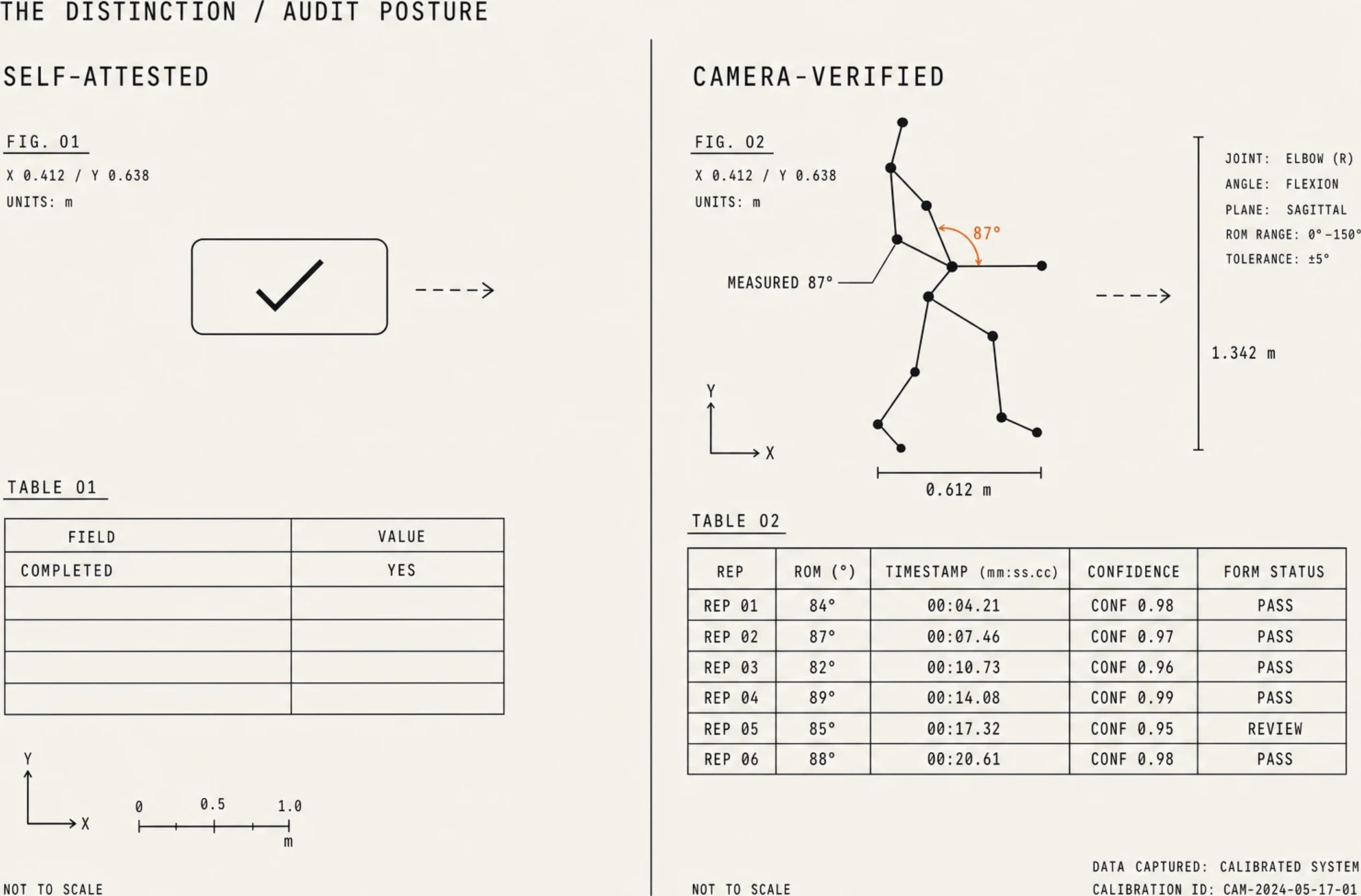
We are not claiming a verified record makes a claim un-deniable. We are claiming there is a real difference between documentation derived from measurement and documentation derived from a button, and that the difference shows up precisely when it matters most.
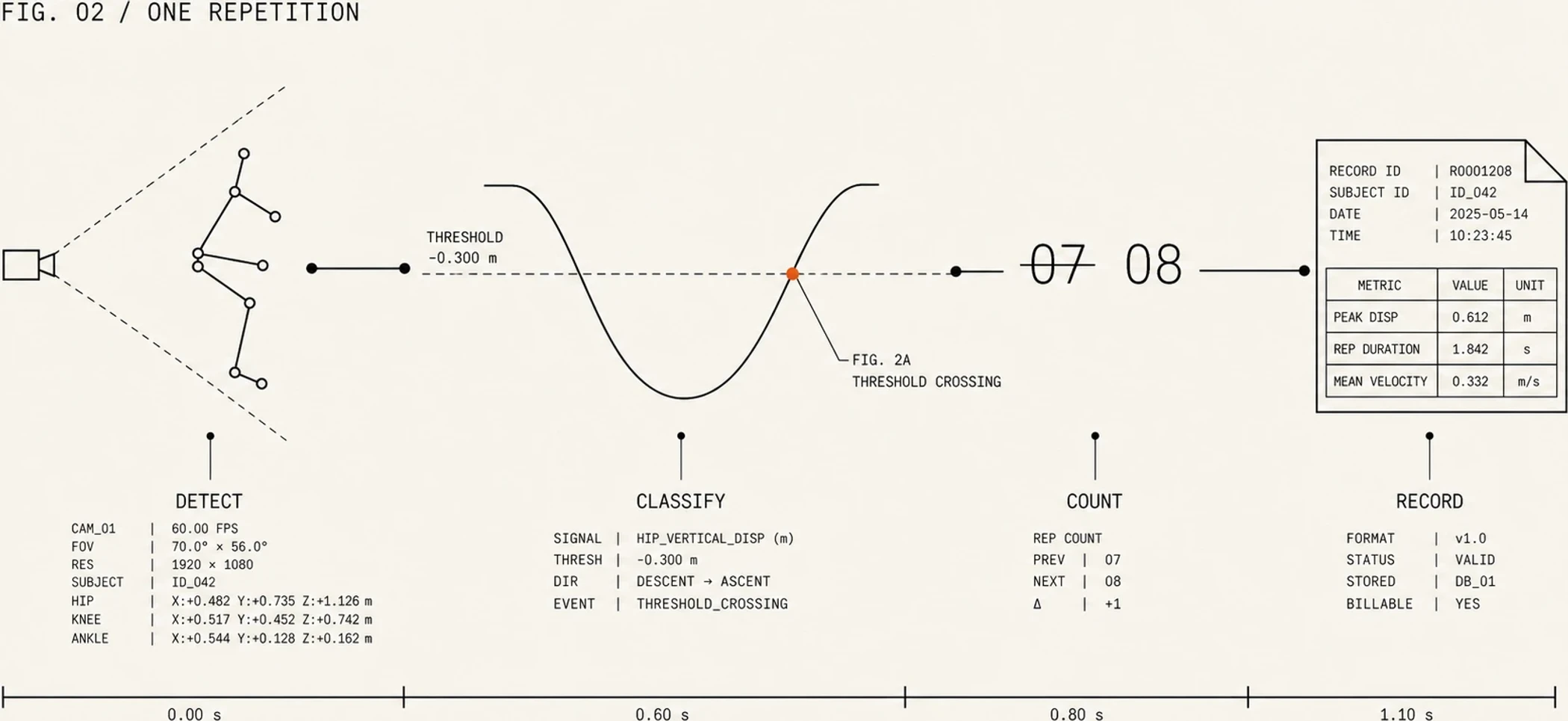
One repetition, measured
A movement is not a rep until the full range of motion is observed. Here is a single repetition traveling from the camera to a written record.
Where the video goes
Nowhere. The measuring happens on the phone, and only the numbers reach your clinic.
The details are on Security & privacy.
Find out what hybrid care would mean for your clinic.
Twenty minutes. We look at your caseload and payer mix, where hybrid care would free up therapist time, whether remote therapeutic monitoring (RTM) is worth billing, and how your current adherence data would hold up if someone asked you to defend it. If the numbers do not work for your practice, we will tell you that on the call.
On the call we cover
- Whether your patient mix clears the monitoring thresholds
- What your current adherence record would survive
- Conservative revenue math against your own numbers
- What a scoped pilot would involve